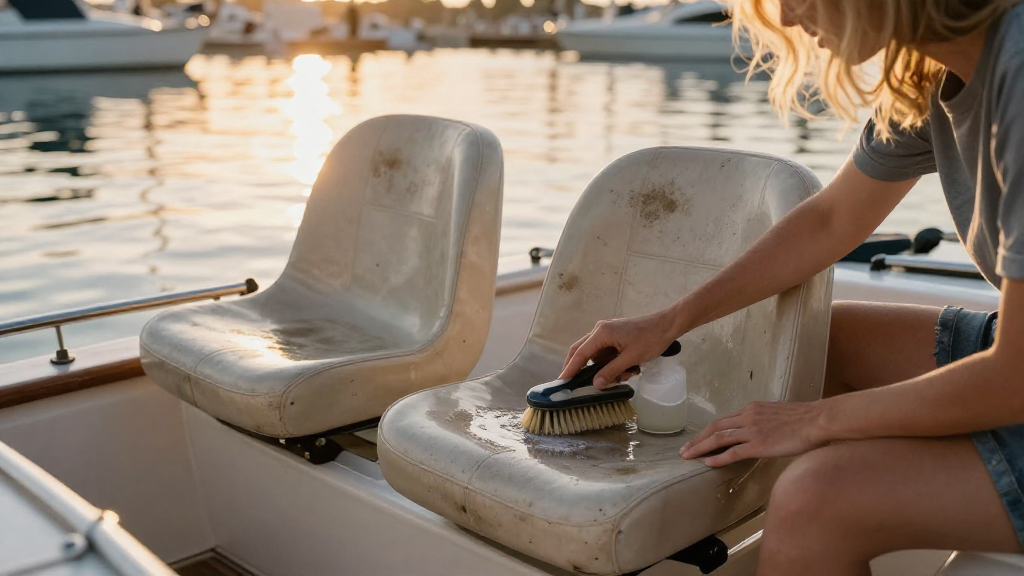
Mold on boat seats is a common issue faced by boat owners.
Knowing how to remove mold from boat seats can save time, money, and prevent health risks associated with mold exposure.
What Causes Mold on Boat Seats?
Mold thrives in moist environments, making boats the perfect breeding ground, especially when left unattended for long periods. Here are some common causes of mold growth on boat seats:
- Humidity: Boats exposed to high humidity levels or water splashes.
- Stagnant Water: Accumulation of water on seats, especially if the boat is not properly cleaned after use.
- Lack of Ventilation: Poor airflow can trap moisture in enclosed spaces, enhancing mold growth.
- Organic Materials: Fabric, leather, and foam on boat seats can provide nutrients for mold.
How to Identify Mold on Boat Seats?
Identifying mold on your boat seats is crucial for effective removal. Look for:
- Discoloration: Dark or often black, green, or gray spots.
- Musty Odor: A damp smell that signals mold presence.
- Texture Changes: Rough or fuzzy surfaces where mold may have grown.
If you observe any of these signs, it’s essential to act quickly to prevent further damage.
How to Remove Mold from Boat Seats: Step-by-Step Guide
Learning how to remove mold from boat seats effectively requires a methodical approach. Here’s a comprehensive step-by-step guide to ensure thorough cleaning and restoration.
1. Gather Your Supplies
Before you start the cleaning process, gather all necessary supplies. You’ll need:
- Mild Soap or Marine Cleaner: Non-toxic options are preferable.
- Water: For dilution and rinsing.
- Sponge or Soft Brush: For scrubbing.
- White Vinegar or Rubbing Alcohol: Effective for killing mold.
- Spray Bottle: For applying solutions.
- Towels: For drying and wiping.
2. Choose an Ideal Location
For safety and efficiency, choose an outdoor location if possible. Proper ventilation will help with:
- Reducing exposure to fumes from cleaning agents.
- Preventing residual moisture from lingering on boat seats.
3. Prepare the Cleaning Solution
When considering how to remove mold from boat seats, choosing the right solution is vital.
- For Light Mold: Mix 1 cup of mild soap with 1 gallon of warm water.
- For Stubborn Mold: Mix equal parts of white vinegar and water in a spray bottle. Alternatively, use rubbing alcohol directly in the bottle.
4. Test a Small Area First
Before applying any cleaning solution to the entire seat, test it on a small, inconspicuous area. This will help you avoid damaging the fabric or leather.
5. Apply the Cleaning Solution
Spray the affected area generously with your chosen solution. For foamy surfaces:
- Allow it to sit for 5-10 minutes to break down the mold.
6. Scrub the Mold Away
Using your sponge or soft brush, gently scrub the moldy area. Remember to:
- Be Cautious: Avoid damaging the material while scrubbing.
- Work in Sections: Makes it easier to ensure all mold is removed.
7. Rinse Thoroughly
After scrubbing, it’s crucial to rinse the seats properly to remove any residue from the cleaning solution. Here’s how:
- Use a clean, damp towel to wipe away the cleaning solution.
- Rinse the towel frequently to ensure you’re not reapplying mold spores.
8. Dry the Boat Seats Completely
Moisture encourages mold regrowth. To ensure complete drying, follow these steps:
- Use Towels: Wipe down the boat seats with dry towels.
- Air Dry: If possible, leave the seats in a well-ventilated area or under sunlight for a few hours.
How to Prevent Mold from Returning?
Learning how to remove mold from boat seats is essential, but preventing future mold growth is equally vital. Here are some effective strategies:
- Regular Cleaning: Clean boat seats with soap and water after each use.
- Dry Off Water: Wipe down any water or splashes before leaving the boat.
- Use Protective Covers: Invest in breathable covers to protect seats when not in use.
- Maintain Air Circulation: Use fans or keep hatches open for good ventilation.
- Store Properly: When storing your boat, ensure it is dry and moisture-free.
When to Seek Professional Help?
If the mold on your boat seats is extensive, or your cleaning efforts seem ineffective, it may be time to consult professionals. Consider this when:
- You notice extensive mold growth beyond what you can handle.
- The material has been damaged or compromised.
- Health concerns arise from mold exposure after cleaning.
Conclusion
Knowing how to remove mold from boat seats is essential for every boat owner to maintain a safe and pleasant environment on board.
By following the steps provided and incorporating preventive measures, you can ensure that your boat seats remain mold-free.
Regular maintenance and vigilance will not only keep your boat looking good but will also protect your health and investment.
Remember to take action at the first sign of mold growth to avoid more complicated cleaning processes down the road!