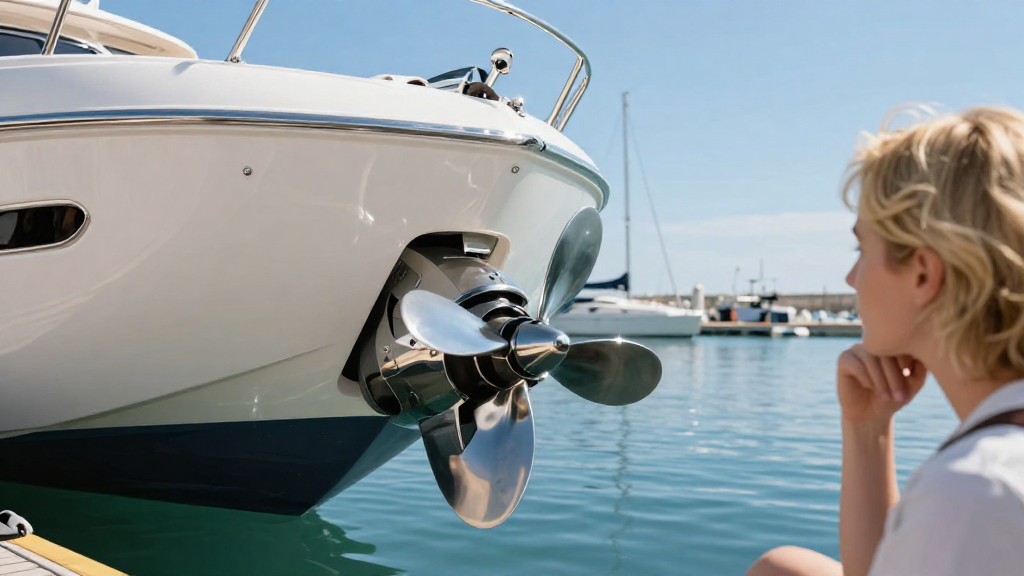
Choosing the right boat propeller is essential for enhancing your vessel’s performance.
In this article, we’ll guide you on how to choose a boat propeller effectively, ensuring you get the best out of your boating experience.
What Factors Should You Consider When Choosing a Boat Propeller?
Understanding the components that affect a boat propeller’s performance is key.
Here are some critical factors to consider:
-
Propeller Type:
– Three-blade, Four-blade, or Two-blade: Each has its advantages depending on your boating style.
– Fixed vs. Folding: Fixed blades offer straightforward performance, while folding blades are more efficient for sailing. -
Diameter and Pitch:
– Diameter: This is the distance from one end of the blade to the other. A larger diameter can provide more thrust.
– Pitch: The angle of the blades affects speed and fuel efficiency. A higher pitch can increase speed but may reduce acceleration. -
Material:
– Aluminum: Good for most general use, affordable, and easily repaired.
– Stainless Steel: Offers better efficiency and durability but at a higher cost.
– Composite: Lightweight and corrosion-resistant, ideal for specific types of boats. -
Motor Specifications:
– Horsepower and RPM: It’s essential to match your propeller’s characteristics with your engine’s capabilities to avoid damaging the motor or reducing performance. -
Water Conditions:
– Freshwater vs. Saltwater: Some materials and designs perform better in saltwater due to corrosion resistance. -
Boat Type and Purpose:
– Skiing, Cruising, or Fishing: Different activities require different propeller characteristics.
By considering these factors, you’ll be better equipped to understand how to choose a boat propeller that suits your needs.
How to Measure Propeller Diameter and Pitch?
Measuring your propeller’s diameter and pitch can be done simply.
For Diameter:
- Use a Measuring Tape: Measure across the back of the propeller from the tip of one blade to the tip of the opposite blade.
- Note the Size: This is your diameter measurement, usually in inches.
For Pitch:
- Understand the Formula: Pitch is determined by the distance a propeller would theoretically travel in one revolution.
- Consult Manufacturer Details: Most manufacturers provide pitch specifications based on specific designs.
Knowing these measurements helps you select a replacement or upgrade for your propeller. This knowledge is vital when figuring out how to choose a boat propeller that aligns with your performance expectations.
What is the Importance of Thrust and Speed?
Thrust and speed are crucial for the overall performance of your vessel.
Understanding Thrust:
- Thrust is the force that moves your boat forward.
- It is essential to have the correct thrust to ensure your boat moves effectively through the water, especially when loaded with passengers or gear.
Understanding Speed:
- Speed impacts how quickly you can travel from one point to another.
- It’s often influenced by the pitch of the propeller. A high pitch allows for higher speed but requires a more powerful engine to maintain effectiveness.
When considering these aspects, you’ll come closer to how to choose a boat propeller that maximizes both thrust and speed tailored to your specific boating demands.
What Are the Benefits of a High-Performance Propeller?
Investing in a high-performance propeller can significantly enhance your boating experience.
Benefits Include:
-
Increased Fuel Efficiency:
– High-performance propellers are designed for optimal efficiency, leading to less fuel usage. -
Improved Acceleration:
– These propellers provide faster acceleration, which is beneficial for activities like skiing. -
Better Handling and Control:
– A well-designed propeller can enhance maneuverability, making it easier to navigate tight turns or crowded areas. -
Longevity:
– High-quality materials usually mean a longer-lasting propeller, reducing the need for replacements. -
Reduced Noise and Vibration:
– Quality propellers often produce less noise and vibration, leading to a more pleasant boating experience.
When exploring how to choose a boat propeller, consider investing in high-performance options if you desire superior speed and efficiency.
How to Test Propeller Performance?
Once you’ve chosen a propeller, testing its performance is vital to ensure it meets your expectations.
Here’s How to Test it Effectively:
-
Check Your Engine RPM:
– When at full throttle, the RPM should match the manufacturer’s recommended range.
– If it’s too low, consider a propeller with a lower pitch; if it’s too high, a higher pitch may be necessary. -
Measure Speed:
– Use a GPS device to monitor your speed.
– Compare your actual speed against your expected speed for that propeller type. -
Observe Handling:
– Pay attention to how your boat responds when turning or handling waves.
– A well-chosen propeller will allow you to maintain control without excessive effort.
Testing your propeller’s performance helps solidify your understanding of how to choose a boat propeller that feels right on the water.
Conclusion: How Do You Choose the Right Boat Propeller?
In summary, understanding how to choose a boat propeller is a multi-faceted process that involves several key factors.
From evaluating diameter and pitch to testing performance once installed, each step is important.
Remember to frequently consider:
- Boat Type and Use: Are you fishing, cruising, or skiing?
- Motor Compatibility: Understand your engine’s horsepower and RPM.
- Material Selection: Choose between aluminum, stainless steel, or composite based on your usage and environment.
By carefully considering all these aspects, you’ll be equipped to make an informed decision.
Whether you want maximum thrust, speed, or efficiency, the right propeller can elevate your boating experience to new levels. Happy boating!