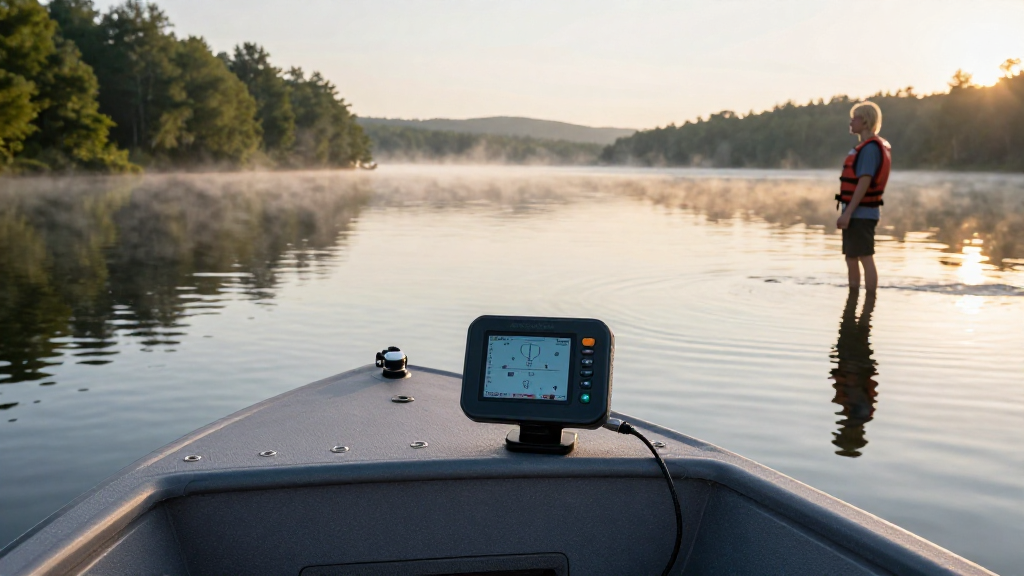
Choosing the right depth finder for boating can significantly enhance your on-water experience.
With so many options available on the market, it’s essential to know what features to consider and how to select the best depth finder for your needs.
What is a Depth Finder and Why Do You Need One?
A depth finder, also known as a fish finder or sonar, is an electronic device used by boaters to determine the water depth beneath their vessel.
This invaluable tool can help:
- Avoid obstacles and underwater hazards
- Locate fish for a successful fishing trip
- Navigate safely in shallow waters
If you’re wondering how to choose a depth finder, you’ll want to consider various factors to ensure you invest in a device that meets your specific needs.
What Features Should You Look For in a Depth Finder?
When deciding how to choose a depth finder, the features that come with the device are crucial. Here are some key features to consider:
-
Display Type and Size
– Look for a device with a display that’s easy to read in various lighting conditions.
– Larger screens with color displays provide better clarity and detail. -
Transducer Type
– The transducer emits sound waves to measure depth.
– Types include:- Through-hull: Mounted inside the boat’s hull, offers a clean look and is great for speed.
- Transom-mounted: Attached to the back of the boat, easy to install and offers versatility.
-
Frequency
– Depth finders operate on different frequencies (typically 50 kHz and 200 kHz).
– Lower frequencies penetrate deeper and are better for deeper waters.
– Higher frequencies provide superior detail in shallower waters. -
Sonar Technology
– Some devices offer 2D sonar, while others provide advanced Down Imaging or Side Imaging.
– Advanced sonars give you better visuals of what lies beneath your boat. -
GPS Integration
– Many depth finders come equipped with GPS technology.
– This feature allows you to mark waypoints, helping you return to productive fishing spots. -
Networking Capabilities
– Networking allows multiple devices to connect.
– This feature is especially beneficial for larger boats where data can be shared seamlessly. -
Durability and Weather Resistance
– Ensure the depth finder is built to withstand marine environments.
– Look for devices that are waterproof or have a high IP rating.
How Do You Determine Your Budget?
The price of depth finders can vary significantly based on features and capabilities.
When deciding how to choose a depth finder, it’s essential to:
- Set a realistic budget.
- Determine what features you cannot do without.
- Remember that investing in a more advanced device may save you money in the long run due to enhanced performance and durability.
Price Ranges:
- Entry-Level Models: $100 – $300
-
Basic depth readings, suitable for casual boaters.
-
Mid-Range Models: $300 – $800
-
Offers better features like GPS, larger screens, and advanced sonar technologies.
-
High-End Models: $800 and above
- Includes advanced sonar, networking capabilities, and superior quality displays.
Where Will You Be Using Your Depth Finder?
Understanding your usage environment is key to finding the right depth finder.
When deciding how to choose a depth finder, consider the following:
-
Freshwater vs. Saltwater
– Some devices are designed specifically for one environment.
– Ensure the device you select performs well in your primary boating location. -
Type of Boating Activity
– Different activities require different kinds of depth finders.
– For example:- Fishing: You may want a model with advanced sonar capabilities.
- Sailing: A basic depth reader may suffice.
-
Water Conditions
– Consider the visibility and clarity of the water in your region.
– Murky waters may require a device with enhanced sonar capabilities to locate fish or obstructions.
How Important is User-Friendliness?
When determining how to choose a depth finder, user-friendliness is crucial.
A more complex device may offer advanced features but can also lead to frustration for users who are not tech-savvy.
Tips for User-Friendliness:
- Look for devices with intuitive menus and interfaces.
- Check if there are online tutorials or user manuals available.
- Consider models with touchscreen technology for easier navigation.
Should You Read Depth Finder Reviews?
Absolutely! User reviews and expert reviews can provide valuable insights when deciding how to choose a depth finder.
Where to Find Reviews:
- Online retail sites with customer feedback.
- Boating forums and websites geared towards boating enthusiasts.
- YouTube tutorials often provide detailed demonstrations and reviews.
Take the time to read various opinions to gauge overall performance and reliability.
Final Thoughts on How to Choose a Depth Finder
Choosing the right depth finder is an investment that can elevate your boating experience.
By understanding the essential features, considering your budget, and evaluating where and how you will use the device, you can make an informed decision.
In summary, remember to ask yourself:
- What features are most important for my boating style?
- How much am I willing to spend on a depth finder?
- Am I looking for basic functionality or advanced technology?
Ultimately, being well-informed will ensure you select a depth finder that enhances your navigation and fishing experiences.
Happy boating and may your adventures be filled with discovery and fun!