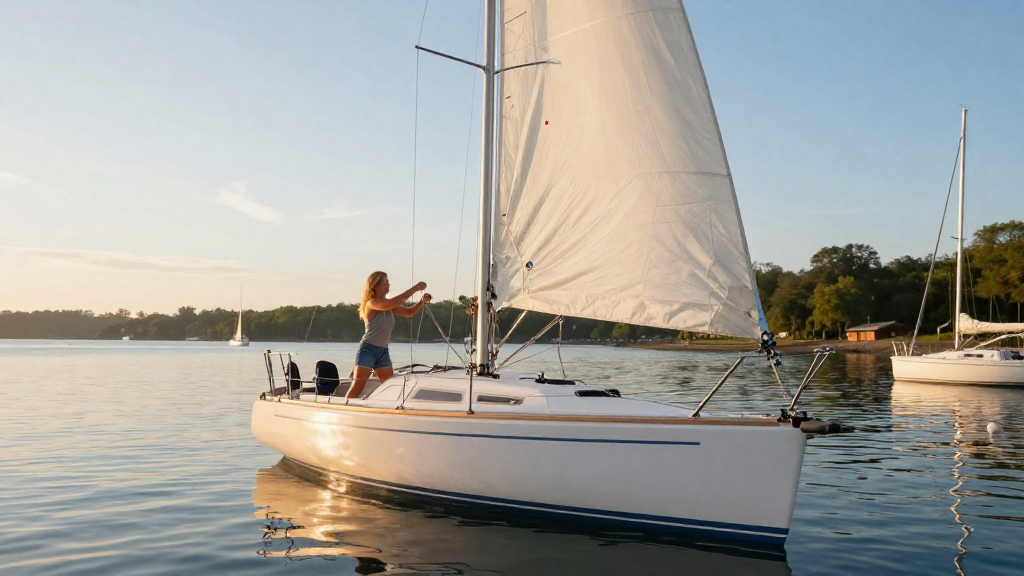
Starting a sailboat for the first time can feel daunting.
However, with the right knowledge and approach, you can easily learn how to start a sailboat and enjoy the beautiful experience of sailing.
In this article, we will outline the steps that beginners need to take to effectively operate a sailboat, from understanding the basic components to being on the water.
What Basic Equipment Do You Need to Start a Sailboat?
Before you can learn how to start a sailboat, you will need to gather some essential equipment. Here’s a list of what you’ll need:
-
Sailing Jacket: A good-quality water-resistant jacket is essential for keeping you dry and comfortable.
-
Life Jacket: Safety first! PFDs (Personal Floatation Devices) are mandatory for all boaters.
-
Navigational Tools: A compass, maps, and a GPS can help you navigate.
-
Sailboat and Gear: Whether you’re renting or owning, ensure your sailboat is in good condition. You’ll also need sailing lines, a rudder, and sails.
-
First Aid Kit: Always be prepared for minor injuries while on the water.
-
Communication Device: A VHF radio is crucial for safety and communication.
What Are the Basic Components of a Sailboat?
To learn how to start a sailboat, it’s essential to familiarize yourself with its components. Here are the main parts of a sailboat:
-
Hull: The body of the boat, which floats on the water.
-
Mast: A tall vertical pole that holds the sails.
-
Sails: These are the fabric used to catch the wind and propel the sailboat.
-
Rudder: This is used to steer the boat.
-
Keel: A structural component that provides stability and reduces sideways drift.
-
Boom: This is a horizontal pole connected to the bottom of the mainsail which helps control its angle.
Understanding these components will give you a solid foundation as you learn how to start a sailboat.
How Do You Prepare a Sailboat for Sailing?
Once you have gathered all the necessary equipment and understood the components of a sailboat, it’s time to prepare your sailboat for sailing. Here are the steps:
-
Inspect the Boat:
– Check the hull for damages.
– Ensure the sails are in good condition.
– Inspect the rudder and keel for any issues. -
Rig the Sails:
– Attach the mainsail and jib to the mast.
– Ensure the lines are correctly routed. -
Prepare Your Gear:
– Keep safety equipment easily accessible.
– Organize navigational tools. -
Start the Engine (if applicable):
– Some sailboats have auxiliary engines. Check the fuel level and start the engine if needed. -
Mooring Lines:
– Untie any mooring lines and make sure you have enough length to maneuver away from the dock.
Preparing your sailboat properly is crucial in learning how to start a sailboat efficiently and safely.
How Do You Sail Away from the Dock?
After preparing your sailboat, it’s time to learn how to start sailing. Here’s how to do it:
-
Assess the Wind Direction:
– Before casting off, determine where the wind is coming from to decide your sailing angle. -
Release the Lines:
– Ensure you have released all dock lines to allow for free movement. -
Use the Engine (if applicable):
– If you’re in a confined space, start the engine to maneuver away from the dock gently. -
Raise the Sails:
– Once you have sufficient distance, raise the mainsail and jib. -
Set Your Heading:
– Steer the boat into the wind to fill the sails gradually. -
Adjust the Sails:
– Trim the sails according to the wind direction for optimal performance.
Learning how to start a sailboat involves mastering the art of sailing away from the dock smoothly.
How Do You Control the Sailboat While Underway?
Once you are out on the water, controlling the sailboat is essential. Here are some tips:
- Steering with the Rudder:
-
Use the tiller or wheel to steer the boat in the desired direction.
-
Adjusting the Sails:
- Trim the sails to optimize the wind’s power.
-
If the boat tilts too much, ease the sails to maintain balance.
-
Tacking and Gybing:
- Tacking: Turn the front of the boat through the wind to change directions.
-
Gybing: Swing the back of the boat through the wind.
-
Using Wind Shifts:
-
Always be aware of shifts and changes in wind direction.
-
Monitoring Speed and Angle:
- Use a speedometer or feel the boat to determine your speed and adjust your angle accordingly.
These skills are critical for learning how to start a sailboat and sail confidently.
What Should You Do When You’re Done Sailing?
After a successful sailing trip, there’s still work to do. Here are the steps for safely returning to shore:
-
Lower the Sails:
– Gradually lower the mainsail and jib while maintaining control of the boat. -
Approach the Dock:
– Maneuver the boat towards the docking area, using the engine if necessary. -
Secure the Sailboat:
– Use mooring lines to secure the sailboat when alongside the dock. -
Check Equipment:
– Inspect all gear and make sure everything is in order. -
Clean the Boat:
– Rinse saltwater off if you were sailing in coastal areas and tidy your equipment.
Understanding the post-sailing process is equally important for learning how to start a sailboat and ensuring a positive experience.
How to Continue Learning and Practicing Sailing?
Sailing is a skill that improves with practice. Here are some ways to continue learning:
-
Take a Course: Enroll in a sailing school for professional instruction.
-
Join a Sailing Club: Connect with other sailing enthusiasts to share experiences and learn.
-
Read Books and Resources: Utilize books and online resources to deepen your sailing knowledge.
-
Practice Regularly: The more time you spend on the water, the better you’ll become at handling a sailboat.
As you continue this journey, remember that learning how to start a sailboat is a step-by-step process, and persistence will lead you to success.
Conclusion
Learning how to start a sailboat may seem challenging, but with this guide, you have all the fundamental tools to embark on your sailing adventure.
From preparing your boat and understanding its components to safely navigating in the water, each step contributes to a richer sailing experience.
Embrace the challenge, practice regularly, and soon you will find yourself confidently sailing the open waters, enjoying the freedom that comes with skillful seamanship.
Get started today, and let the wind guide you to your next adventure!