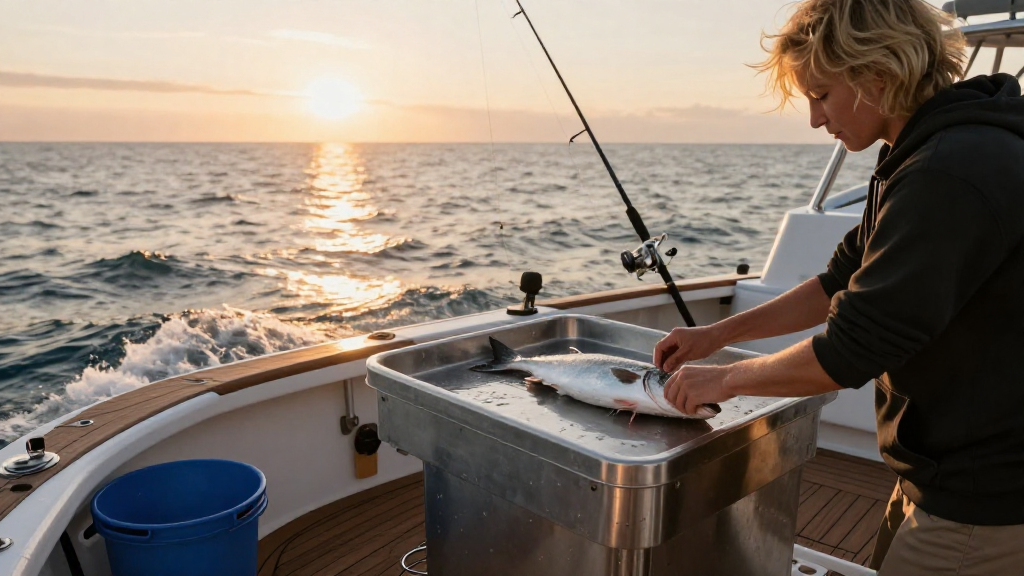
When you’re out on the water enjoying a beautiful day of fishing, you may wonder how to clean fish on a boat safely.
Learning how to properly clean your catch is essential to ensure freshness, minimize waste, and enhance your boating experience. This guide will walk you through the best practices to clean fish on a boat effectively and safely.
What Do You Need to Clean Fish on a Boat?
Before diving into the process, it’s crucial to have the right tools and materials ready. Here’s a list of what you need:
-
Cutting Board: A sturdy surface makes all the difference.
-
Fillet Knife: A sharp knife is essential for a clean cut.
-
Bucket: For holding parts of the fish and disposing of waste.
-
Fresh Water: Essential for rinsing and cleaning.
-
Gloves: Disposable gloves help maintain cleanliness and safety.
-
Ice or Ice-Container: To preserve the fish after cleaning.
Optional Items
-
Fish Scaler: For those who prefer scaled fish.
-
Towel or Rag: Useful for wiping hands and tools during the process.
Having these tools behind you will make your experience safer and more hygienic.
How to Clean Fish on a Boat Step by Step?
Now that you have the necessary items, let’s discuss how to clean fish on a boat effectively. Follow these simple steps:
1. Choose the Right Spot
Safety first!
Find a stable and flat area on your boat to clean the fish.
Make sure the area is free from obstructions and securely anchored.
This step is crucial as it prevents accidents while working with sharp tools.
2. Prepare the Workspace
Keep it hygienic!
-
Wash your hands and tools thoroughly with fresh water to minimize bacteria.
-
Lay out everything you need within easy reach to avoid running around during the cleaning process.
3. Remove the Fish from the Line
Once you catch a fish, the next step is to remove it from the line.
Be careful to avoid injuring yourself.
Hold the fish firmly and utilize a fish de-hooker if available.
4. Scale the Fish (if Desired)
If you prefer cleaned fish with scales removed, use a fish scaler or the back of your fillet knife.
-
Start at the tail and work your way toward the head.
-
Rinse the fish to remove loose scales.
5. Gut the Fish
Gutting is an essential step in learning how to clean fish on a boat.
Here’s how you do it:
-
Insert the Knife: Gently insert the knife into the belly of the fish, just below the rib cage.
-
Make a Clean Cut: Cut towards the head, ensuring you don’t puncture the intestines.
-
Remove the Organs: Use your fingers to pull out the entrails carefully.
6. Rinse the Fish
Once you have gutted the fish, it’s important to rinse it with fresh water.
This step ensures that you remove any blood or residues.
7. Fillet the Fish (if Desired)
If you prefer fillets, the next step is to filet the fish:
-
Position the Fish: Lay it flat on the cutting board with its spine facing you.
-
Start Filleting: Insert the fillet knife at the head end and cut along the spine down to the tail.
-
Follow the Ribs: Angle the knife to slide alongside the ribs to remove as much meat as possible.
-
Remove the Skin (Optional): Slide the knife between the skin and the fillet to separate.
8. Store the Fish Properly
After cleaning, it’s vital to store your fish appropriately.
-
Place it in the bucket with ice to keep it fresh.
-
Always keep it on ice until you reach land, especially in warm weather.
How to Dispose of Fish Waste Responsibly?
When cleaning fish on a boat, responsible disposal of fish waste is necessary.
Most marinas provide designated areas for fish waste disposal.
If you don’t have access to a waste bin, consider these options:
-
Use a Waste Container: Store waste in a bucket until you find a suitable disposal area.
-
Dump at Sea: If it’s allowed, throw the entrails and waste into the sea to avoid creating a smell on the boat.
Important Notes
- Always check local regulations about fish cleaning and waste disposal.
- Make sure you comply with any laws about how and where you can dispose of fish parts in your area.
Why is It Important to Clean Fish on a Boat?
Understanding how to clean fish on a boat not only enhances your fishing experience but also ensures that:
-
The Fish Stay Fresh: Cleaning right away minimizes bacterial growth.
-
Less Waste: Proper techniques ensure you utilize as much of the fish as possible.
-
Safety: Keeping a clean workspace helps avoid accidents and foodborne illnesses.
What Should You Remember While Cleaning Fish?
A few final tips to consider:
-
Practice Safety at All Times: Always be cautious with sharp knives.
-
Keep Your Area Clean: This prevents attracting unwanted pests and maintains hygiene.
-
Always Have Extra Supplies: Accidents happen; it’s crucial to have extra tools or supplies available.
-
Enjoy the Process: Cleaning your catch can be rewarding—transitioning from fisherman to chef in just a few steps.
By following these guidelines on how to clean fish on a boat safely, you can enjoy your fishing experience to the fullest.
Not only will you have a cleaner catch, but you’ll also gain valuable skills that enhance your time on the water.
Time to cast those lines again and enjoy the catch of the day!