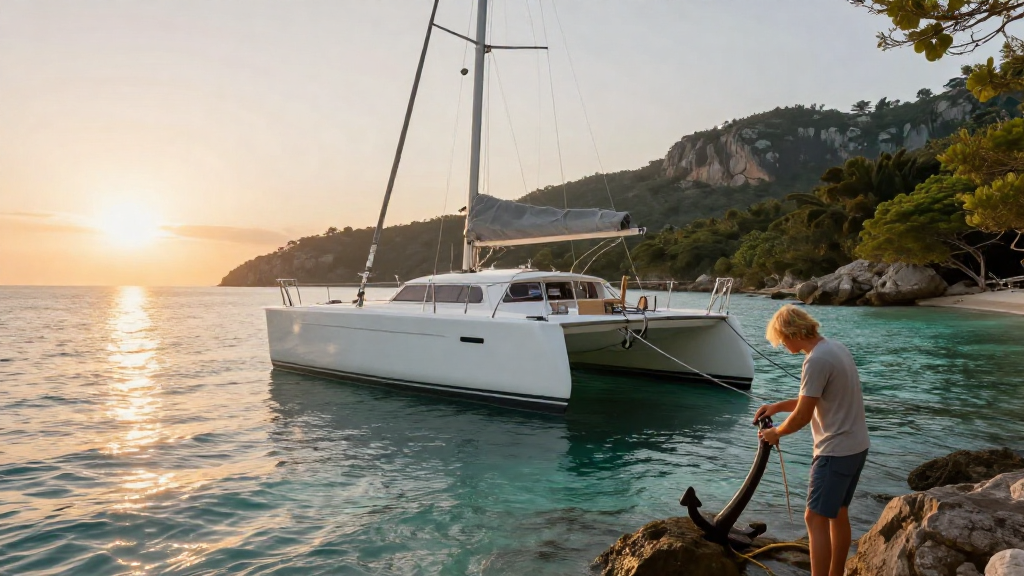
Anchoring a catamaran can be a straightforward task when you know the right techniques and best practices.
In this article, we will explore how to anchor a catamaran effectively for both shallow and deep waters, ensuring your vessel remains secure and safe.
What Techniques Are Best for Anchoring a Catamaran?
When it comes to understanding how to anchor a catamaran, various techniques can be employed depending on the water depth and the seabed conditions.
Here are some tried-and-true techniques:
-
Choose the Right Anchor:
– Types: Select an anchor suited for your sailing environment. Options include fluke, plow, and grapnel anchors.
– Weight: The anchor’s weight should be proportional to your catamaran’s size—generally, 1 pound (0.45 kg) of anchor weight per foot (30 cm) of boat length. -
Use the Proper Rope:
– Rode Material: Consider using nylon rope for its stretch or chain for its weight.
– Length: The length of the rode should be at least 7-10 times the depth of the water for a secure hold. -
Drop the Anchor:
– Positioning: Position the vessel where you want to anchor and ensure your catamaran is facing into the wind.
– Deployment: Gently lower the anchor to the seabed while keeping tension on the rode. -
Set the Anchor:
– Reverse Slowly: Shift into reverse to set the anchor. This helps to embed the anchor into the seabed.
– Check Holding: Observe if the catamaran is moving. If it drags, re-deploy.
By mastering these techniques, you will gain confidence in how to anchor a catamaran securely.
How Do Depth and Conditions Impact Anchoring?
One of the critical factors when learning how to anchor a catamaran is understanding how both depth and seabed conditions affect anchoring technique.
Shallow Waters
- Less Than 5 Feet:
- In these depths, you may use a small anchor or a grapple to hold your catamaran.
-
Always check the bottom to ensure there are no obstacles like rocks or seaweed.
-
Techniques:
- Kedge Anchor: Use a kedge anchor and lines to secure your vessel from multiple points if it is windy.
- With Small Tides: Anchor closer to shore to avoid getting stranded as tides shift.
Deep Waters
- More Than 10 Feet:
- You’ll need more rode to ensure a secure hold, ideally at a 7:1 scope ratio for better holding.
-
Chain vs. Rope: A longer chain rode can provide additional weight to help keep the anchor dug in.
-
Techniques:
- Windless Use: If in deeper waters, consider using a windlass to handle the heavy anchor.
- Multi-point Anchoring: In windy conditions, anchoring off of more than one point will increase your stability.
Understanding these nuances of anchoring in varying depths adds to your knowledge of how to anchor a catamaran effectively.
What Are the Best Practices for Placing the Anchor?
In addition to understanding depth and anchoring techniques, employing best practices can further enhance your anchoring skills.
Best Practices to Remember
-
Scout the Area:
– Before anchoring, drive around the area to identify suitable spots free from hazards. -
Check the Weather:
– Always monitor weather conditions and forecasts, especially wind and wave patterns. -
Use Markers:
– Use buoys or other printable markers to keep track of your position after anchoring. -
Regularly Inspect the Anchor:
– Check your anchor at regular intervals to ensure it remains set. -
Plan for Emergencies:
– Always have a plan in place for quickly retrieving the anchor if the weather suddenly worsens.
Incorporating these best practices ensures you are well-prepared and increases your confidence in how to anchor a catamaran under different conditions.
What Should You Do if Your Anchor Drags?
Sometimes, despite our best efforts, an anchor may drag.
Steps to Take if Your Anchor Drags
-
Alert Your Crew:
– Always inform your crew of any movement or possible dragging. -
Check Position:
– Use GPS or other devices to determine if the catamaran is moving. -
Retract and Reset:
– Pull the anchor up and inspect it for debris or entanglements. Reset the anchor correctly and ensure it is properly set. -
Add More Scope:
– If you notice dragging, increase the rode length to enhance your holding. -
Reassess Location:
– If re-setting doesn’t work, move to a different location with better holding ground.
Being aware of these steps is crucial when considering how to anchor a catamaran effectively, ensuring safety and stability.
What Should You Know About Local Regulations?
Before anchoring, familiarize yourself with local regulations.
- Restricted Anchoring Zones:
-
Some areas may have rules regarding anchoring to protect marine lifezones.
-
Environmentally Sensitive Areas:
-
Be aware of and avoid damaging sensitive ecosystems, including coral reefs or sea grass beds.
-
Navigational Hazards:
- Make sure you do not anchor in designated shipping lanes where it could pose a risk.
Effectively ensuring compliance with local regulations is vital knowledge when considering how to anchor a catamaran in protected waters.
Conclusion
Anchoring a catamaran can be a simple affair with the right knowledge and technique.
This guide on how to anchor a catamaran in shallow and deep waters provides you with essential tips, best practices, and troubleshooting strategies.
By understanding the factors that affect anchoring and adhering to local regulations, you can enjoy safe and secure anchoring experiences.
As you practice these techniques, anchoring will become a seamless part of your sailing routine, allowing you to appreciate the beauty of the waters you explore.
Ultimately, becoming proficient in how to anchor a catamaran ensures that your adventures on the water will be both enjoyable and worry-free. Happy sailing!