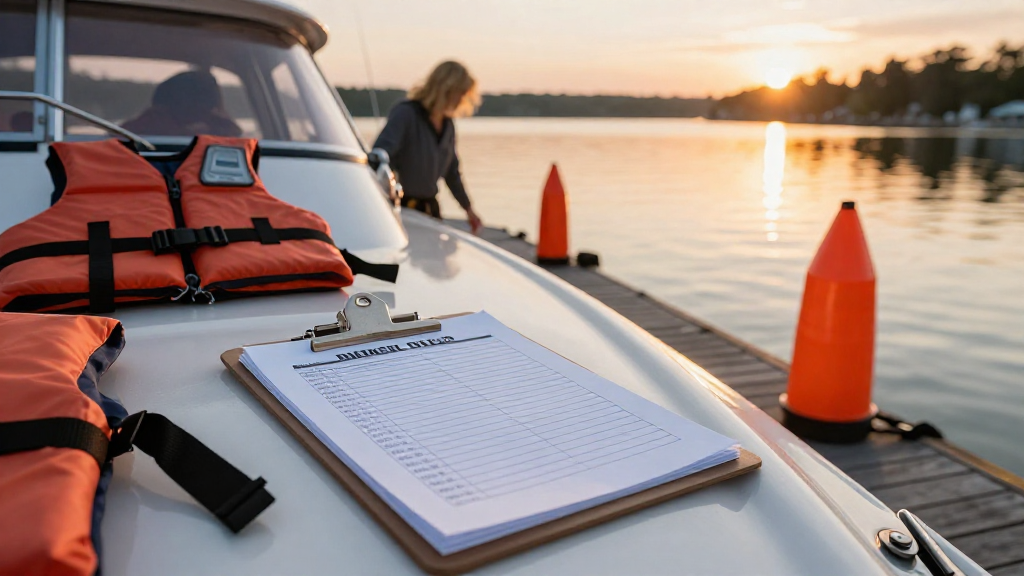
Performing a boat safety inspection is paramount for ensuring the safety of you and your passengers while enjoying the water. This guide will educate you on how to do a boat safety inspection effectively, covering all essential aspects to keep your vessel and crew safe.
What Is a Boat Safety Inspection?
A boat safety inspection involves evaluating critical safety equipment, documentation, and overall condition to adhere to safety regulations.
It focuses on ensuring that you have all the necessary items on board and that they are in good working order.
Regular inspections can also prevent accidents and ensure compliance with local laws.
Why Should You Perform a Boat Safety Inspection?
Before we dive into how to do a boat safety inspection, let’s explore why it’s important.
A boat safety inspection:
- Ensures compliance with legal requirements and safety regulations.
- Prevents accidents by identifying potential hazards.
- Provides peace of mind for crew and passengers.
- Optimizes the performance and lifespan of the boat.
What Do You Need for Your Boat Safety Inspection?
To begin, gather the necessary tools and documents for your inspection:
- Safety equipment: Life jackets, fire extinguishers, flares
- First aid kit
- Documentation: Registration, insurance, emergency contact numbers
- Inspection tools: Flashlight, multimeter, water tester
How Do You Inspect Personal Flotation Devices?
One of the primary aspects of how to do a boat safety inspection revolves around Personal Flotation Devices (PFDs).
Make sure to check:
- Quantity: Ensure you have enough PFDs for every passenger.
- Condition: Look for frays, tears, or damaged buckles.
- Type: Confirm that the PFDs are approved by the U.S. Coast Guard.
- Fitting: Ensure that each PFD fits the individual correctly, based on size and weight.
How to Inspect Fire Safety Equipment?
Fire safety equipment is vital when conducting a boat safety inspection. To ensure all is in order:
- Locate Fire Extinguishers: Ensure that you have at least one type B fire extinguisher on board.
- Check Expiry Dates: Verify that all extinguishers are within their expiration date.
- Condition: Inspect for any rust, damage, or leaks.
- Accessibility: Ensure extinguishers are easily accessible and not obstructed by other items.
How to Inspect Visual Signaling Devices?
In emergencies, visual signaling devices can be lifesavers. Here’s how to check them:
- Flares:
– Ensure they are not expired.
– Store them in an accessible location. - Daytime/Showing Signals:
– Confirm you have any necessary signaling devices like flags. - Reflectors:
– Check that they are clean and positioned correctly for visibility.
How to Ensure Navigation Equipment is Functional?
Another critical aspect of how to do a boat safety inspection is ensuring you have functional navigation equipment.
Follow these steps:
- Check Navigation Lights:
– Inspect that all lights function properly.
– Clean any tarnished connections and replace burnt-out bulbs. - Ensure GPS and Maps are Updated:
– Have up-to-date nautical charts.
– Verify that your GPS is operational and has the latest updates. - VHF Radio:
– Test the radio to ensure you can communicate in case of an emergency.
How to Inspect the First Aid Kit?
A well-equipped first aid kit is vital for any boat safety inspection. Make sure to:
-
Items Included: Verify you have:
– Adhesive bandages
– Antiseptic wipes
– Gauze and adhesive tape
– Burn cream
– Prescription medications are necessary. -
Expiration Dates: Replace any expired items.
-
Visibility: Ensure that the kit is placed in an easily accessible location.
How to Check the Boat’s Hull and Structural Integrity?
A boat’s hull needs to be inspected to ensure there are no leaks. Here are steps to follow:
-
Visual Inspection:
– Look for cracks or signs of wear and tear.
– Examine the points where the hull connects with the transom. -
Check for Moisture:
– Use a moisture meter to determine if there’s water intrusion. -
Inspect the Drain Plugs:
– Ensure drain plugs are functional and can be sealed correctly.
How to Verify Your Boat’s Fuel System?
Safety doesn’t stop at the equipment; the fuel system is just as important. Here’s how to check it:
-
Inspect Fuel Lines:
– Look for any cracks or signs of wear.
– Make sure all connections are tight and secure. -
Check Fuel Tank:
– Ensure there are no leaks or signs of corrosion.
– Make sure your fuel is fresh and not contaminated.
How to Handle Documentation?
Lastly, thorough documentation is a crucial aspect of how to do a boat safety inspection. Make sure that:
-
Registration and Titles:
– Ensure that your vessel is appropriately registered with the state authorities. -
Insurance:
– Have proof of insurance on board. -
Emergency Contacts:
– Keep a list of emergency contacts easily accessible.
Conclusion: How to Do a Boat Safety Inspection
In conclusion, performing a complete boat safety inspection is an essential practice for any boat owner.
By following this checklist, you can ensure the safety of everyone aboard and comply with essential regulations.
Remember to regularly perform these checks to keep your boat in top condition.
Stay safe on the water! With proper care and regular inspections, you can ensure a worry-free boating experience for you, your family, and your friends.
Follow these guidelines, and you’ll be well on your way to mastering how to do a boat safety inspection. Happy boating!