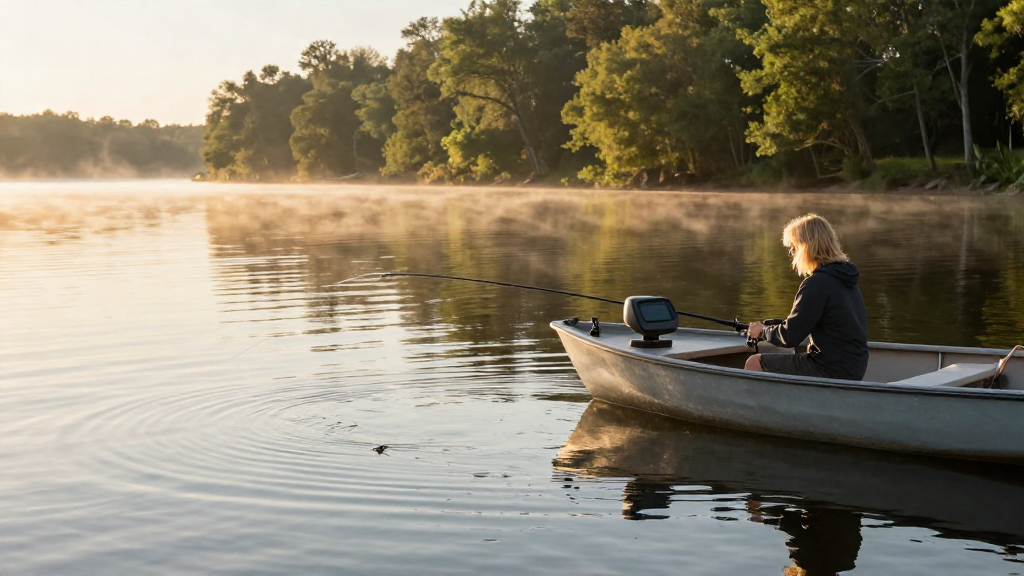
If you’re an angler looking to enhance your fishing game, understanding how to find fish with sonar is essential.
Sonar technology can significantly improve your chances of catching fish.
But how does it work? Let’s dive into the details.
What is Sonar and How Does it Work?
Sonar, which stands for Sound Navigation and Ranging, is a technology that uses sound waves to detect objects underwater, such as fish, structures, and the sea floor.
Types of Sonar:
-
Single Beam Sonar: Projects a narrow beam of sound directly beneath your boat.
-
Side Imaging Sonar: Provides a wider view on either side of the boat, allowing you to see more underwater features.
-
Down Imaging Sonar: Offers detailed images directly below the boat, ideal for spotting fish.
The sonar transducer emits sound waves that bounce off objects in the water, sending back echoes that help you determine their location, size, and shape.
Why Do You Need to Know How to Find Fish with Sonar?
Understanding how to find fish with sonar offers several benefits:
- Increased Efficiency: No more wasting time fishing in unproductive areas.
- Better Understanding of Fish Behavior: Learn where fish are most likely to congregate.
- Improved Fishing Skills: Mastering sonar technology can elevate your fishing techniques.
Sonar helps you locate fish more effectively, turning a whole day of searching into targeted fishing.
How to Set Up Your Sonar Unit?
Follow these simple steps to set up your sonar unit:
-
Choose the Right Location:
– Mount the transducer on your boat’s transom or trolling motor.
– Ensure there are no obstacles that could interfere with the sound waves. -
Power the Unit:
– Connect the sonar unit to a reliable power source.
– Make sure the battery is fully charged before heading out. -
Adjust the Settings:
– Set the correct frequency based on your fishing conditions.
– Lower frequencies penetrate deeper but provide less detail, while higher frequencies offer more detail at shallow depths. -
Calibrate Your Sonar:
– Ensure the sonar unit is calibrated for accurate readings.
– This may involve adjusting sensitivity and range settings based on your specific location.
What Should You Look For on Your Sonar Display?
Now that you’ve set up your sonar unit, it’s time to understand what you’re seeing on the display.
Look for these key indicators:
- Fish Arches:
- Fish typically display as arches or blobs that rise from the bottom.
-
A clear arch is an indication of a fish swimming.
-
Bait Balls:
- Often represented by clusters of small dots or clouds.
-
These indicate areas where baitfish are present, often attracting larger fish.
-
Structure:
- Irregularities on the bottom, such as rocks, fallen trees, or reefs, can be prime fish-holding areas.
-
Fish are often found near these structures.
-
Depth Changes:
- Sudden drops or rises in depth can indicate channels and ledges, where fish often congregate.
Understanding how to interpret these indicators will significantly boost your fishing success.
How to Position Your Boat for Optimal Fish Finding?
Once you’ve identified potential fishing spots using sonar, the next step is to position your boat correctly.
Tips for Boat Positioning:
-
Approach Slowly:
– Use a trolling motor for quiet and controlled movement to avoid scaring fish away. -
Cast Ahead:
– Position your boat upstream or upwind, allowing your bait to drift naturally into the target area. -
Use Current to Your Advantage:
– Position your boat so that your bait drifts with the current towards fish-holding structures. -
Monitor Your Sonar Continuously:
– Be attentive to the sonar reading as you drift or move, as fish locations can change rapidly.
What Techniques Should You Use While Fishing?
Knowing how to find fish with sonar is just the first step.
Let’s explore some fishing techniques to maximize your chances of a catch.
Effective Fishing Techniques:
-
Vertical Jigging:
– Drop your bait straight down into the water column where you see fish marked on your sonar. -
Drifting with Live Bait:
– Use live bait and let it naturally drift in the vicinity of fish-holding structures identified by your sonar. -
Casting:
– After locating fish, cast or troll right through the area where sonar indicates fish concentrations. -
Use Lure Colors Wisely:
– Experiment with different colors to see what attracts fish better in the specific water conditions.
How to Maintain Your Sonar Unit for Long-Term Use?
To ensure your sonar unit remains functional and effective, proper maintenance is essential.
Maintenance Tips:
- Clean the Transducer:
-
Periodically remove any debris or algae buildup that could interfere with readings.
-
Check Electrical Connections:
-
Ensure all connections are secure and free of corrosion.
-
Update Software:
-
Regularly update your sonar unit’s firmware to improve performance and add features.
-
Store Properly:
- When not in use, store your sonar unit in a dry, cooler area to prevent heat damage.
Conclusion: Mastering the Art of Using Sonar
By understanding how to find fish with sonar, you can take your fishing skills to the next level.
The proper setup, continuous monitoring, and effective fishing techniques will optimize your angling success.
Sonar technology is a game-changer for anglers of all skill levels.
Make the most of your next fishing trip by embracing sonar technology and enjoy the thrill of catching more fish than ever before!
Happy fishing!