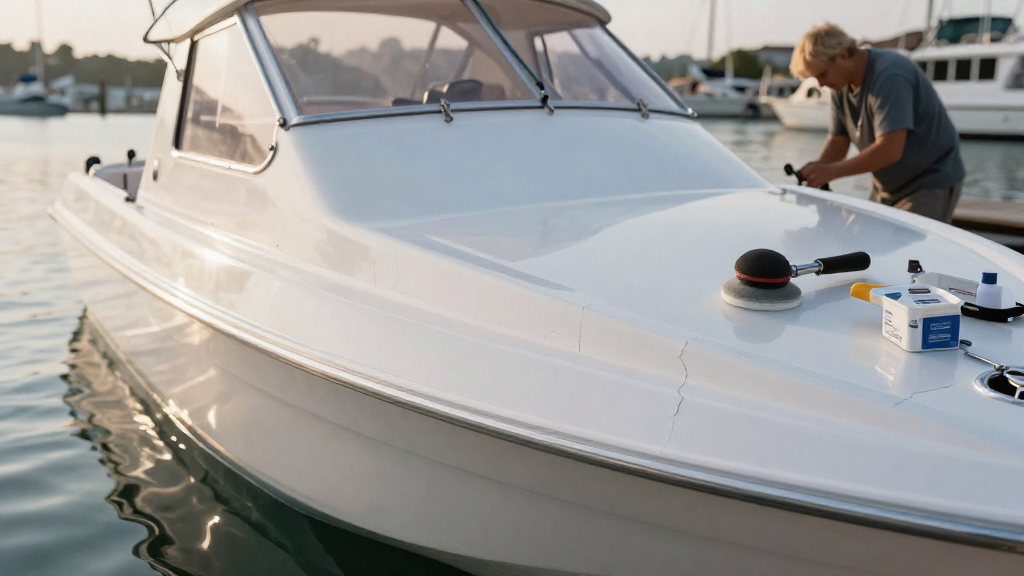
If you’re a boat owner, you may eventually face the issue of gelcoat cracks. This article will guide you on how to repair gelcoat on a boat, ensuring your vessel remains in prime condition for many new adventures.
What Causes Gelcoat Cracks on Your Boat?
Understanding the root causes of gelcoat cracks is essential in effectively addressing and preventing them.
- Sun Damage: Prolonged exposure to UV rays can deteriorate the gelcoat.
- Water Infiltration: Water can penetrate cracks, causing further damage.
- Impact Damage: Scratches or impacts from docks and other boats can lead to cracks.
- Age and Wear: Over time, gelcoat can naturally deteriorate and develop cracks.
By identifying these factors, you’ll be better equipped to prevent and repair cracks in your gelcoat.
How to Repair Gelcoat on a Boat: What Supplies Do You Need?
To learn how to repair gelcoat on a boat, you’ll need specific tools and materials. Here’s a concise list to prepare for the repair process:
- Gelcoat Repair Kit: This typically contains gelcoat, hardener, and colorant.
- Sandpaper: Various grits (80, 120, and 320) for surface preparation.
- Acetone or Solvent: For cleaning the area before repair.
- Masking Tape: To protect areas around the crack.
- Plastic Spreader: For applying the gelcoat.
- Paint Applicator: A small brush or roller for fine detail work.
- Respirator and Protective Gear: Safety first!
Having everything on hand will make the repair process smoother and more efficient.
How to Repair Gelcoat on a Boat: What Are the Steps?
Now that you have your supplies ready, let’s get into the how to repair gelcoat on a boat step-by-step method.
1. Assess the Damage
Before beginning, inspect the extent of the crack.
– Is it just surface-level?
– Does it extend deeper into the fiberglass?
2. Clean the Area
Using acetone or a suitable solvent:
– Wipe the crack thoroughly to remove dirt and debris.
– Let it dry completely before proceeding. This step ensures proper adhesion of the new gelcoat.
3. Sand the Damaged Area
With sandpaper:
– Start with 80-grit paper to roughen the surface.
– Gradually move to 120-grit and then 320-grit to create a smooth surface.
The goal is to create a solid base for the new gelcoat to adhere to.
4. Mask the Surrounding Area
To prevent accidents:
– Use masking tape to cover any areas that you don’t want to get gelcoat on.
– Make sure the tape lines are straight for a cleaner appearance.
5. Mix the Gelcoat
Following the repair kit’s instructions:
– Mix the gelcoat, hardener, and colorant.
– Make sure that you accurately measure the ingredients; improper mixing can affect the curing process.
6. Apply the Gelcoat
Using the plastic spreader:
– Apply the mixed gelcoat into the crack, ensuring it fills completely.
– Use your brush or roller for precision if the crack is small.
7. Let It Cure
Follow the instructions for the gelcoat to:
– Allow it to cure undisturbed. This can take anywhere from a few hours to a couple of days, depending on the brand and environmental conditions.
8. Sand the Repaired Area Smooth
Once cured:
– Lightly sand the area with 320-grit sandpaper until smooth and even with the surrounding gelcoat.
9. Polish the Finished Area
To restore the shine:
– Use a polishing compound and a soft cloth to buff the area to a high gloss finish.
10. Remove the Masking Tape
Carefully peel away the masking tape:
– This reveals clean lines and a professional-looking repair.
How to Prevent Future Gelcoat Cracks on Your Boat?
After you have successfully learned how to repair gelcoat on a boat, consider these preventative measures to prolong the lifespan of your boat’s gelcoat:
- Apply a UV Protectant: Regularly apply UV protectant products designed for boats to shield against sun damage.
- Routine Waxing: Wax your boat at least twice a year to create a protective barrier.
- Store Properly: If possible, store your boat indoors or use a high-quality cover to protect it from the elements.
- Regular Inspections: Frequently inspect your boat for damage so you can address small issues before they become larger problems.
When Should You Seek Professional Help?
In some cases, it’s best to consult a professional. Consider getting expert assistance if:
– The damage is extensive.
– The gelcoat has delaminated, which means it might be lifting from the fiberglass.
– You are inexperienced and feel intimidated by the repair process.
Conclusion
Now you know how to repair gelcoat on a boat and what steps to take to maintain its integrity. Proper repair and preventative maintenance are crucial for preserving your boat’s beauty and functionality.
By regularly checking for damage and taking proactive measures, you can enjoy your boat for many years.
Remember, a well-maintained boat not only looks good but retains its value, allowing you to create unforgettable memories on the water!