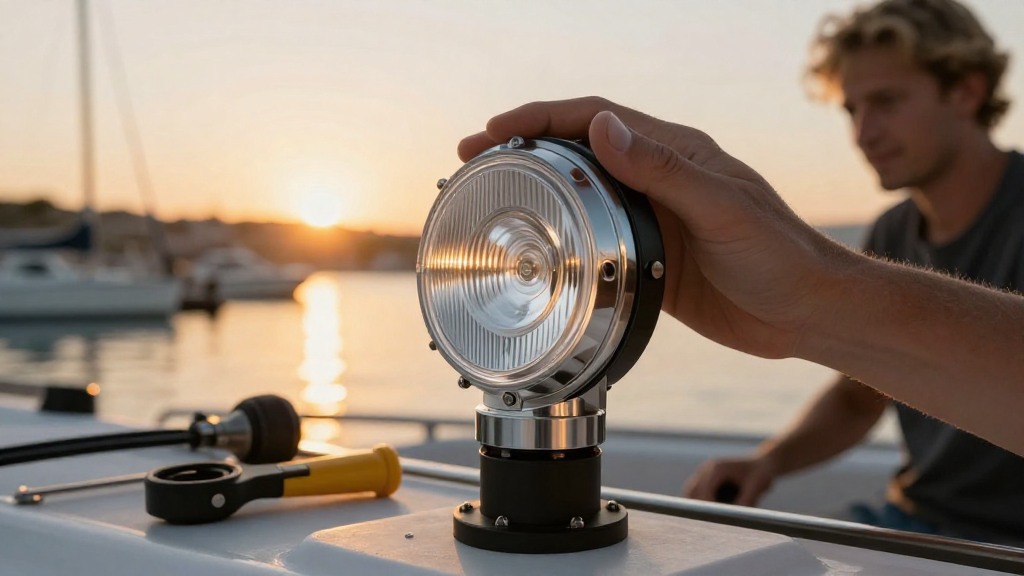
If you’re wondering how to replace boat navigation lights, you’re in the right place.
Navigating the waters safely depends on functional navigation lights, which serve as critical indicators for your boat’s position to other vessels. Whether you’re upgrading to brighter LED lights or simply replacing worn-out fixtures, this guide will walk you through the process step by step.
What Do You Need to Know Before You Start?
Before diving into how to replace boat navigation lights, it’s essential to gather all necessary tools and materials. Here’s what you’ll need:
- Replacement Navigation Lights: Ensure they’re suitable for your boat size and type.
- Screwdriver Set: Usually, a Phillips and flat-head screwdriver will suffice.
- Wire Strippers: To prepare wires for proper connections.
- Electrical Tape or Heat Shrink Tubing: For securing connections.
- Multimeter: To test electrical connections.
- Safety Glasses and Gloves: Always prioritize your safety.
How Do You Remove the Old Lights?
Removing your existing boat navigation lights is a straightforward process. Here’s how:
-
Turn Off Power: Always start by disconnecting power to the lighting system to prevent any electrical accidents.
-
Access the Lights:
– Depending on your boat design, you may need to remove screws or lift a cover.
– Be gentle to avoid damaging the surrounding area. -
Disconnect Wires:
– Identify how the old lights are connected.
– Use wire strippers to gently remove wires from their terminals. -
Inspect the Old Fixtures:
– Before discarding them, check if there are any useful parts or screws you can reuse.
How to Install the New Navigation Lights?
Once the old lights are removed, it’s time to install the new ones. Follow these steps carefully:
-
Position the New Lights:
– Place the new navigation lights in the intended position.
– Ensure they align correctly with any pre-drilled holes from the previous installation. -
Connect the Wires:
– Use wire strippers to expose a quarter-inch of wire on each end.
– Connect the corresponding wires from the light fixture to your boat’s electrical system.
– Typically, you will have a positive (usually red) and negative (black) wire. -
Secure Connections:
– Wrap your connections with electrical tape or use heat shrink tubing to protect against moisture.
– Confirm each connection is tight and secure. -
Attach the Lights:
– Use your screwdriver to fasten the lights in place.
– Ensure they’re mounted securely to prevent any movement while at sea.
How to Test Your New Navigation Lights?
Before you head out on the water, testing your new lights is a crucial step in learning how to replace boat navigation lights successfully.
-
Reconnect Power: Turn the power back on to your lighting system.
-
Use a Multimeter:
– Set your multimeter to the voltage setting.
– Test each connection for power, ensuring everything is functioning correctly. -
Check Each Light:
– Turn on the navigation lights in various modes (running lights, stern lights, etc.) and verify they all operate correctly. -
Inspect for Brightness:
– LEDs should emit bright, clear light. If the lights flicker or seem dim, check your connections again.
What Are Common Issues to Look Out For?
While learning how to replace boat navigation lights, you may encounter common issues.
- Corroded Connections:
-
Make sure no connections have corrosion, which can lead to malfunction. Clean any corroded connections and apply dielectric grease.
-
Improper Alignment:
-
If the lights are not aligned correctly, they may not provide adequate visibility or may not meet safety regulations.
-
Water Leakage:
- Ensure that the new lights are sealed properly to prevent water from entering and causing electrical shorts.
Why is Proper Maintenance Important?
Proper maintenance of your boat navigation lights is essential for safety and efficiency.
- Safety First:
-
Navigation lights help prevent collisions, especially in low visibility conditions.
-
Regulatory Compliance:
-
Many maritime laws require functional navigation lights for boats. Ensure that yours meet all safety standards.
-
Prolonged Lifespan:
- Regular inspections and proper installations can extend the lifespan of your navigation lights.
When Should You Replace Your Navigation Lights?
Knowing when to replace your navigation lights is key to boat safety.
- Dim Lights:
-
If your lights have noticeably dimmed, they should be replaced for optimal performance.
-
Physical Damage:
-
Any cracks, burns, or physical damage should be addressed immediately.
-
Flickering:
-
Flickering lights might indicate a bad connection or the need for replacement.
-
Age:
- Navigation lights, especially older bulbs, can degrade over time. Generally, replacing them every few years is advisable.
Conclusion
Now that you know how to replace boat navigation lights, you can ensure your vessel is safe for navigation at any time of day or night.
An efficient installation not only keeps you safe but also enhances the overall functionality of your boating experience.
Remember to keep an eye on the condition of your lights and maintain them regularly.
With this guide, navigating the waters securely is just a few steps away! Always prioritize safety, and happy boating!