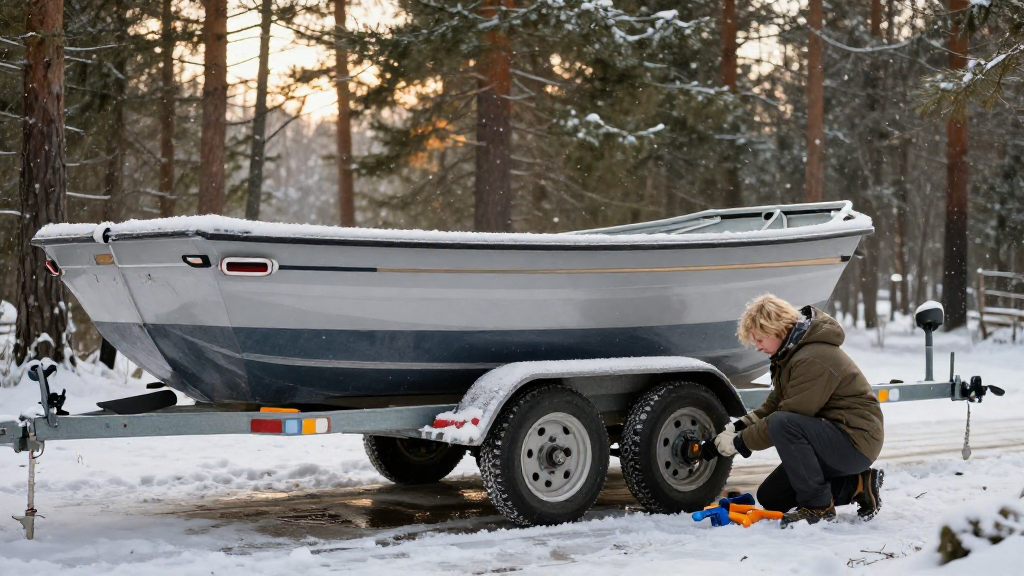
As colder temperatures approach, it’s crucial to learn how to winterize your boat trailer effectively.
Winterizing ensures that your trailer withstands the tough winter climate, protecting it from rust, wear, and damage.
Why is Winterizing Important for Your Boat Trailer?
Winter can be harsh on different kinds of equipment, including boat trailers.
Not only do icy roads pose a risk during towing, but snow and moisture can also lead to significant damage if your trailer isn’t properly prepared.
Here’s a look at the core reasons for winterizing:
- Prevents Rust and Corrosion: Ice, snow, and slush can create perfect conditions for rust.
- Maintains Functionality: Ensuring that brakes and electrical systems work smoothly when spring arrives.
- Extends Lifespan: Proper maintenance helps to prolong the life of your trailer.
With this understanding, let’s dive into the specifics of how to winterize your boat trailer successfully.
What Steps Should You Follow to Winterize Your Boat Trailer?
To effectively winterize your boat trailer, follow these essential steps. Each step is critical to ensuring that your trailer is ready for the freeze:
1. Clean the Trailer Thoroughly
The first step in winterization is cleaning your trailer.
- Remove All Debris: Check the wheels and underneath the trailer for any leaves, dirt, or other debris.
- Wash Down: Use a power washer or hose to remove salt, grime, and other residues.
- Dry Completely: Allow your trailer to dry entirely to prevent moisture accumulation that can lead to rust.
2. Check and Service the Tires
Ensuring your tires are in good shape is vital during the winter months.
- Inspect Tire Condition: Look for any signs of wear or damage.
- Check Pressure: Inflate your tires to the recommended pressure levels. Under-inflated tires can succumb to damage more easily in cold weather.
- Consider Rotation: This might be a good time to rotate tires if used frequently.
3. Inspect Brakes and Lights
Your trailer’s performance and safety rely heavily on its braking and lighting systems.
- Test Brake Functionality: Engage the brakes and check for responsiveness.
- Inspect Brake Fluid: Top off if necessary.
- Check Lights: Make sure all lights are functioning properly, including brake lights, turn signals, and reflectors.
4. Lubricate All Moving Parts
Lubrication is one of the essential aspects of how to winterize your boat trailer properly.
- Grease the Bearings: This is critical to prevent the bearings from rusting and ensure smooth operation.
- Apply Lube on Hinges and Joints: These are areas prone to rust so keeping them lubricated is vital.
- Check the Winch and Crank: Ensure these parts are well-lubricated and functioning as expected.
5. Protect Against Moisture
Moisture can wreak havoc on trailers during winter.
Here are several ways to protect against moisture:
- Use a Moisture Absorber: Consider placing silica gel packs or similar products in the storage compartment to absorb humidity.
- Seal Exposed Parts: Inspect for gaps, and use weather stripping to seal any exposed sections.
- Apply a Protective Coat: Consider using a protective wax or sealant spray on the trailer’s surface to prevent moisture buildup.
6. Store Your Trailer Properly
Where and how you store your boat trailer through the winter months can make a difference.
- Choose a Dry Location: Look for a storage area that is not exposed to heavy snowfall or rain.
- Cover Your Trailer: If you can’t store indoors, invest in a high-quality tarp to protect it from the elements.
- Elevate the Trailer: If possible, consider placing blocks under the trailer to lift it from the ground, preventing moisture buildup.
7. Disconnect Battery and Electronics
If your trailer has electronic brakes or other systems, follow these steps:
- Disconnect the Batteries: Remove the battery from the trailer to prevent corrosion. Store it in a cool, dry place.
- Wrap Cables and Connections: Protect electronic connections using insulation tape to prevent moisture from causing corrosion.
8. Review Your Trailer’s Documentation
While this may seem trivial, keeping track of your trailer information is essential when winterizing.
- Record Maintenance Work: Document all the winterization steps you took.
- Review Manufacturer’s Guide: Always consult your owner’s manual for any specific recommendations related to winterizing.
How Can You Further Optimize Your Winterization Process?
Besides following the above steps for how to winterize your boat trailer, consider these additional tips:
- Stay Organized: Keep a checklist for winterization tasks so nothing gets overlooked.
- Set Reminders: Schedule yearly reminders for winterization tasks to ensure you never forget.
- Connect with Experts: If you feel uncertain, consult a professional for guidance based on your trailer type.
When Should You Start Winterizing?
It’s never too early to start preparing your boat trailer for winter.
Aim to begin the winterization process before the first significant snowfall. Typically, late fall is the ideal time to get your trailer ready for winter.
This timing allows for any necessary repairs or adjustments and ensures that your trailer is in optimal condition before harsh weather sets in.
In conclusion, knowing how to winterize your boat trailer is essential for maintaining its longevity and functionality.
Adhering to the outlined steps ensures that your trailer remains in good shape, ready for use when the weather warms up again.
Proper preparation now can save you time, money, and hassle when spring comes around. So, don’t wait until the first snow hits!
Start the winterization process today to protect your investment. With diligence and care, your trailer can thrive through winter and last for years to come.